
Noida’s Second Expressway Along Yamuna Pushta: Timeline, Status, Challenges & What It Means for Buyers
13 Jan 2026
7 min read
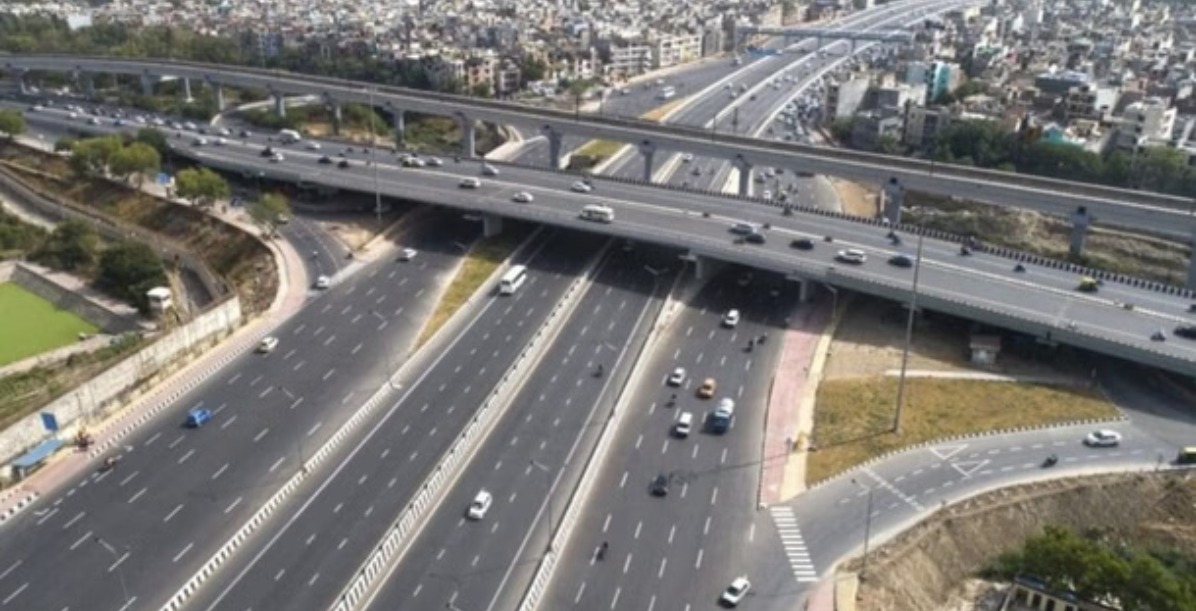
Table of content:
As Noida’s urban footprint continues to expand—driven by rising office absorption, increasing residential density, and airport-linked growth—the pressure on its primary mobility spine, the Noida–Greater Noida Expressway, is becoming increasingly evident.
To address this growing strain, the Uttar Pradesh government has revived deliberations around a second high-capacity corridor along the Yamuna Pushta (river embankment). Commonly referred to as Noida’s second expressway, the proposal has resurfaced following a high-level government meeting held in Lucknow in early January 2026.
This article breaks down what is currently planned, what is holding the project back, and how much of this development is actionable versus aspirational—especially from a homebuyer and investor perspective.
The proposed project involves an elevated, access-controlled road corridor running along the Yamuna river embankment. Its purpose is to function as a parallel mobility spine to the existing Noida–Greater Noida Expressway rather than as a local connector road.
Reported Alignment
Starting point: Near Kalindi Kunj / Okhla Barrage
Route: Eastern edge of Noida, running parallel to the Yamuna
End point: Sector 150, with onward linkage toward Pari Chowk and the Yamuna Expressway
Length: ~23 km within Noida; approximately ~30 km including extensions
The corridor is envisioned as a high-speed, limited-entry road, designed for through-traffic rather than internal sector circulation.
The need for this corridor is rooted in long-term urban mobility planning rather than short-term congestion relief.
Key Planning Drivers
Single-spine dependency: Noida currently relies heavily on one expressway for inter-sector, inter-city, and airport-bound traffic.
Traffic diversification: A parallel corridor reduces congestion load and improves system resilience during peak hours, accidents, or maintenance disruptions.
Airport-oriented growth: With increasing traffic expected toward Greater Noida and the Jewar airport belt, dispersal routes become essential.
From an urban planning perspective, this is about network redundancy, not merely faster travel times.
Despite repeated discussions over the years, the project remains stalled due to one critical statutory hurdle.
The Irrigation Department has not granted its No-Objection Certificate (NOC), citing concerns that construction activity near the embankment could:
Compromise flood protection mechanisms
Disrupt drainage and monsoon water discharge
Weaken the structural integrity of the Yamuna embankment
This is not a procedural clearance. Without irrigation approval, the project cannot move into execution, regardless of administrative intent or political backing.
During the January 2026 meeting, multiple execution pathways were reportedly discussed:
1. National Highways Authority of India (NHAI)
Requires National Highway (NH) classification
Strong execution capacity and central funding access
2. Uttar Pradesh Expressways Industrial Development Authority (UPEIDA)
Experienced in delivering large state expressways
Earlier reports suggested UPEIDA as the executing agency
3. Public–Private Partnership (PPP)
Considered for financing
Dependent on toll viability and regulatory clarity
As of now, no executing agency has been formally finalised.
Several reports indicate that declaring the corridor a National Highway could facilitate NHAI involvement. However, it is important to understand the limitations:
NH notification is a central government process
It does not override environmental or embankment safety objections
It improves funding prospects, but does not guarantee project clearance
September 2024: Initial discussions emerge around NH classification of the Yamuna Pushta corridor
March–April 2025: In-principle movement and design-level discussions reported
April 2025: State-level reports suggest a six-lane elevated corridor under UPEIDA
December 2025: Public confirmation that the project is stalled due to irrigation department objections; focus shifts to internal road strengthening
January 2026: High-level meeting held in Lucknow to reassess alignment, execution model, and feasibility
For Homebuyers
Do not factor this corridor into current buying decisions
Until statutory clearances, executing agency, and DPR approvals are in place, the project remains in the planning stage
Purchase decisions should be based on existing access, livability, and infrastructure, not future expressway projections
This qualifies as an early-signal infrastructure story, not a delivery-stage one
Sentiment premiums often emerge early, but durable capital appreciation typically follows visible execution
Track clearance resolutions and on-ground movement rather than announcements


Ghaziabad Aerocity and Hindon Airport Connectivity: Road Links, Metro Access and Future Development.

How Interest Rate Changes Affect Home Buying Power in 2026.
.png)
Puravankara Enters Greater Noida: What Its ₹340 Crore Land Deal Means for NCR Real Estate.
.png)
How Millennials Are Changing the Indian Real Estate Market.
.png)