
How Metro Connectivity Is Redefining Property Demand
28 Feb 2026
8 min read
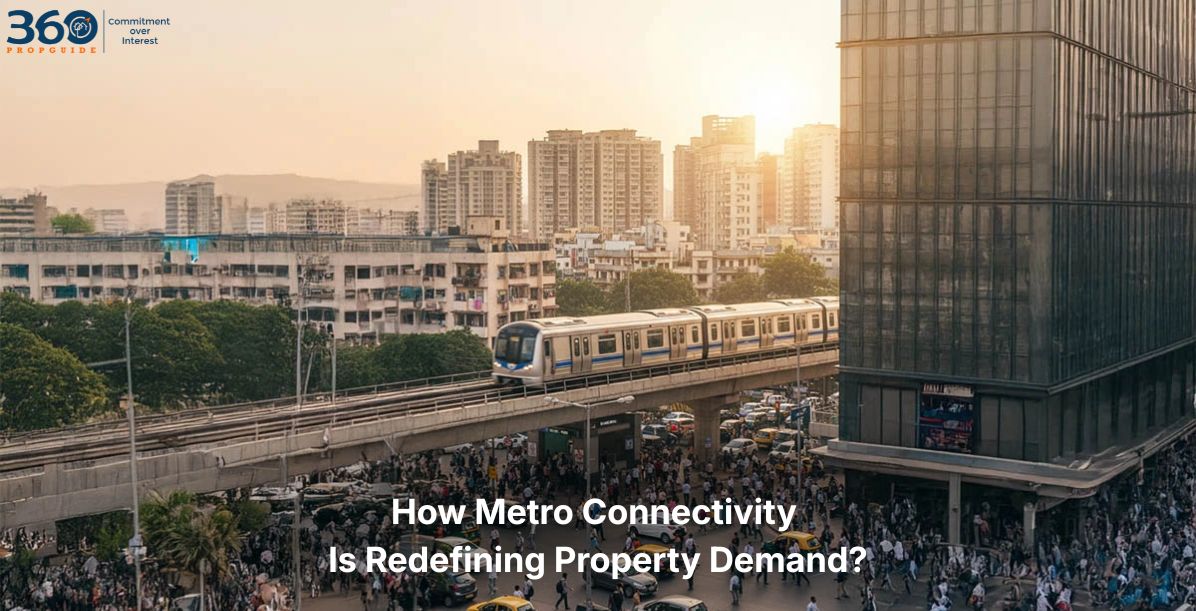
Table of content:
Infrastructure has never been an exception in determining real estate markets. Metro connectivity in NCR has come up as the largest spur of residential and commercial development.
As the expansion continues with the assistance of the Delhi Metro Rail Corporation, the new routes are enhancing the connectivity between commercial areas and residential areas. This has made property around metro routes a high priority for buyers as well as investors.
Such cities as Noida and Gurugram enjoy the direct fruits of this connectivity enhancement.
The NCR transport network is enhancing its network and introducing new real estate opportunities with several new routes and extensions.
Linkages between outer sectors and central business areas.
New interchange stations with higher network efficiency.
Direct connections between Noida, Greater Noida, and Delhi.
Increased accessibility to IT and trading areas.
Enhanced accessibility of the last-mile via feeder routes.
These are cutting down on the time taken to go to homes and are also making places that were far reachable to the home buyers.
Metro usage directly enhances the lives of the residents and working class of people. In the long run, such convenience will translate into increased demand for property.
Reduced time of getting to offices and business hubs.
Less reliance on personal cars.
There is increased accessibility to schools, hospitals, and malls.
Increased preference of tenants to local properties.
Higher attendance to retail and commercial areas.
Homes close to the current or future metro stations have always recorded tighter price stability and rental requirements.
Some micro-markets are becoming the prime beneficiaries of the growing metro infrastructure.
Sectors of expressways in Noida that have accessibility to new stations.
Building residential belts in Greater Noida.
Gurugram Corporate areas and extensions.
Stations of transit-oriented development.
Mixed use precincts in key stations.
These regions are experiencing increasing buyer interest prior to full completion of the corridors, demonstrating high confidence in the future.
The past record has shown that the appreciation of the adjacent property values was gradual but steady due to metro connectivity. As soon as a line is operational, the demand is expected to grow within a 1 to 3 km radius.
Rental markets also benefit. The convenience that they provide means that tenants would want to stay in areas that are attached to the metro and this in turn enables the landlords to set higher prices. This has been able to provide a stable income environment to the long-term investors over the years.
In the case of the end-users, accessibility to a metro enhances convenience in lifestyle. To the investors, it enhances exit potential and liquidity.
Well-known developers are also aggressively buying land and initiating projects along major metro lines. Growth is also accelerated by their presence.
To appeal to urban professionals, companies such as Max Estates, among other institutional developers, are working on transit-oriented development.
This approach improves:
Project planning standards
Infrastructure integration
Financial and legal transparency.
The long-term quality of maintenance.
Buyer confidence
In the event of a metro extension and robust developers, the locations have a high likelihood of maturing more quickly.
The properties connected to the Metro are not short-term assets that are speculative in nature. They are appreciating in value as the infrastructure around them grows progressively.
Such locations have superior demand even in the slow market periods as a result of day to day utility. Within the metro proximity, the metro proximity may also be the determining factor in the resale and rental performance over the period of 8-12 years.
To the long-term ownership buyers, opting to rent a place connected by metro would lower the uncertainty that might arise in the future.
NCR is changing the way of life and commute of people with the new metro lines. They are relating the new fields to job centers and turning the far areas into places where they can easily carry out daily life.
In the case of real estate, it would translate to increased demand, enhanced stability in the rentals, and long-term appreciation. Places that have good metro connectivity are no longer desired amenities but are becoming must-haves.
In the changing market environment of the Delhi ncr, the metro connectivity will remain the determiner of the winners and the laggers. Buyers and investors that will take the same approach and make a decision that is in line with transit growth will gain the most in the next decade.

.png)
Puravankara Enters Greater Noida: What Its ₹340 Crore Land Deal Means for NCR Real Estate.
.png)
How Millennials Are Changing the Indian Real Estate Market.
.png)
Max Estates Enters Ghaziabad with a ₹2,500–3,000 Crore Residential Project.

What Is a Penthouse? Advantages and Disadvantages of Buying a Penthouse in India.


.png)
.png)
